Socks designed for performance help cut down on tired feet thanks to their seamless build and shape that fits the foot better. The way these socks are knitted actually works with how our feet move, spreading out pressure where it matters most such as around the heels and toes. Some research from 2022 showed runners who wore these specially made socks felt about 30 something percent less uncomfortable halfway through their 10k races than those wearing regular socks. Makes sense really when thinking about all that pounding on pavement.
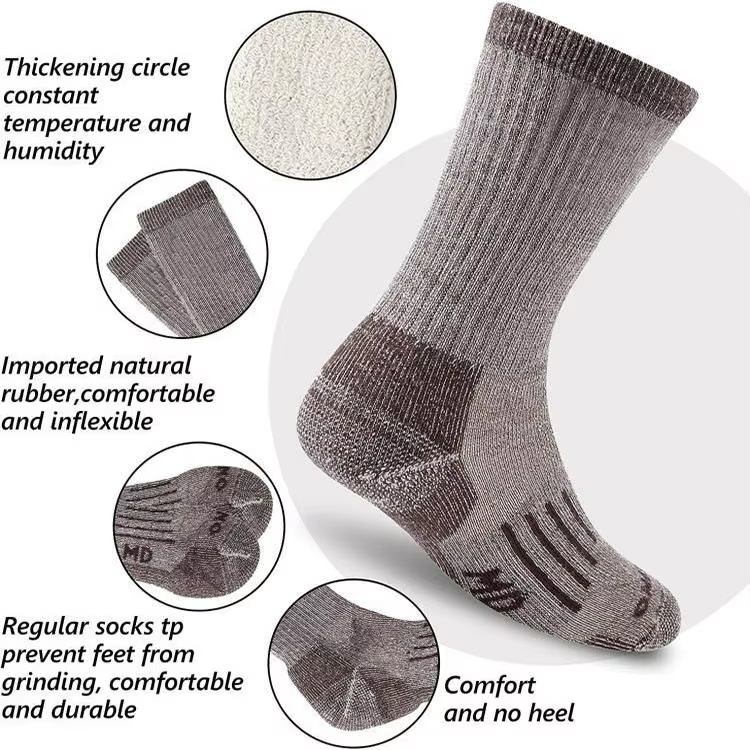
Synthetic fibers like polyester move sweat five times faster than cotton, maintaining a 40–60% drier foot environment. This helps prevent maceration—skin softening that contributes to 78% of runner blisters. Antimicrobial treatments in premium socks also reduce fungal proliferation by 89%, according to dermatological trials.
Merino wool blends reduce shear forces by 22% while keeping foot temperatures within ±2°F of optimal. Targeted compression zones stabilize ankles during lateral movements, cutting inversion sprains by 17% in court sports. The American College of Sports Medicine notes proper sock materials lower overuse injury rates by 13% in multi-hour activities.
A 2023 study in the Journal of Sports Sciences tracked marathon runners using double-layer performance socks. The group experienced a 62% reduction in blisters compared to those wearing single-layer alternatives, with 84% reporting improved race completion times. Researchers attribute this to friction-reducing yarns that maintain a coefficient under 0.3 even at 90% humidity.
When someone works out in cotton clothing, it can soak up anywhere from four to six times its own weight in sweat. This creates a wet spot right next to the skin which makes blisters much more likely than with synthetic fabrics. Studies show this actually raises the chance of getting blisters by almost half compared to synthetics. What's worse, cotton tends to hold onto moisture instead of letting it dry off, increasing the risk of fungal infections by about a third during long workouts. And let's not forget about temperature control either. Cotton just doesn't regulate body heat well at all, so athletes wearing it might end up sweating through their clothes in hot weather or feeling cold when temperatures drop suddenly.
Modern performance socks use engineered polyester and nylon blends that wick moisture 2.8 times faster than cotton and retain 93% of their elasticity after 50 washes. These fabrics feature:
These features help athletes maintain consistent foot comfort and hygiene during extended training sessions.
A 2024 study of 1,200 marathon participants showed that switching to performance socks led to significant improvements:
Runners also improved their average 10K times by 4.7 minutes, highlighting how advanced sock technology directly enhances athletic performance.
Merino wool excels in natural performance, wicking 30% more moisture than synthetics while resisting odor for up to 72 hours. Its ultrafine fibers regulate temperature effectively—keeping feet warm in sub-40°F environments and cool above 80°F. This stable microclimate reduces blister formation and enhances comfort across seasons.
Synthetic fabrics have taken over in areas that get the most wear and tear because they resist abrasion better and dry much quicker than other options. Take nylon for instance it makes things last almost half again as long compared to cotton. And then there's polyester, which has this built-in water repelling property that lets it dry three times faster than anything from nature. That's why manufacturers love using these materials in trail running socks specifically. When someone's pounding the pavement or scrambling over rocks, reducing friction becomes really important, especially when feet move side to side repeatedly throughout a run.
Lycra’s 500% stretch capacity ensures socks maintain compression without constriction, even after repeated washing. When integrated into arch and ankle bands, it reduces muscle oscillation by 18% during endurance activities. This support minimizes fatigue and prevents slippage that can lead to blisters.
Looking at what works best in the industry, many top performing fabrics mix around 40 to 50 percent Merino wool with about 25 to 30 percent synthetic stuff like nylon or polyester, plus roughly 15 to 20 percent Lycra. The Merino handles temperature regulation pretty well, while the synthetics make things last longer, and the Lycra just gives that snug fit that moves with the body. Take ultramarathon running socks as a case study they tend to have those reinforced nylon toes at around 35 percent and Merino lined sections making up about 45 percent of the material. This setup lets air circulate but still holds up when someone runs hundreds of miles on end without falling apart completely.
The height of socks makes a real difference when it comes to how well they protect feet and let air circulate. Those short no-show types, about 2 to 3 centimeters tall, are great partners for low top shoes worn during runs or on the tennis court. They cover what needs covering but stay hidden under the shoe so nobody notices them. Then there are crew length socks that measure around 15 to 20 cm. These come in handy for hikers or soccer players because they wrap around the ankle area properly. This helps stop those annoying rubs from boots or shin guards rubbing against skin all day long. When temperatures drop and folks hit the slopes for skiing, knee high socks become essential. They keep legs warm while still allowing enough freedom of movement so skiers don't feel restricted by their gear.
Five-toe designs separate digits to minimize skin-to-skin contact, lowering blister risk by 34% in trail runners. Individual toe sleeves improve splay during dynamic movements, enhancing stability in rock climbing or yoga. Proper sizing is essential—tight compartments may restrict circulation and negate benefits.
Graduated compression (15–20 mmHg) boosts venous return by 27% during endurance events. For recovery, targeted 20–30 mmHg compression around arches and calves accelerates lactate clearance. Accurate sizing is crucial; improperly fitted compression socks can cause numbness or swelling.
Anatomically mapped socks follow natural foot contours, eliminating excess fabric that bunches inside shoes. Seamless toe closures and 3D heel locks reduce hotspots, especially for long-distance runners. A 2024 Footwear Materials Report confirms 67% of athletes experience fewer blisters when wearing socks with arch-hugging bands and precision heel cups.
Common fit issues include:
To ensure proper fit, measure both foot length and instep height, as volume varies significantly even within standard shoe sizes.
| Activity Type | Recommended Cushion | Shoe Compatibility |
|---|---|---|
| Marathon | 3–5 mm strategic padding | Racing flats |
| Basketball | Full-foot 6–8 mm cushion | High-top sneakers |
| Mountaineering | Reinforced 10 mm zones | Rigid boots |
Thinner socks (<2 mm) suit low-bulk needs like soccer, while maximal cushioning (8–10 mm) absorbs impact in high-intensity court sports. Match cushioning and compression levels to activity duration to optimize support and energy return.
Performance socks prevent blisters using dual-layer fabrics that shift friction between layers rather than against the skin. Critical areas often feature seamless toes and silicone-treated yarns, which reduced blister incidence by 34% in a 2023 study of 500 trail runners. These innovations are vital for uneven terrain requiring repetitive foot strikes.
Strategic mesh panels increase airflow by 40% compared to solid knits, targeting sweat-prone areas like the instep and Achilles tendon. Combined with moisture-wicking fibers, this ventilation maintains foot temperatures below 102°F—the threshold where comfort and performance decline sharply.
Abrasion-resistant reinforcements extend sock lifespan by 2.5 times, based on independent wear testing. Trail-specific models incorporate:
| Reinforcement Type | Benefit | Common Placement |
|---|---|---|
| Linked-Stitch Tech | Prevents fabric tears | Heel cup |
| Multi-Density Yarn | Resists rock abrasion | Toe box |
| Bonded Seams | Eliminates thread wear | Metatarsal joints |
Field studies show ultramarathon runners using these designs required 58% fewer mid-race sock changes than those using standard trail socks.
Match sock features to environmental demands using this framework:
For variable conditions, consider foot strike patterns, load weight, and temperature ranges. Desert runners should prioritize evaporation rates above 0.8g/hr, while alpine hikers need thermal retention maintaining 85–95°F in freezing environments.
 EN
EN