
 EN
EN
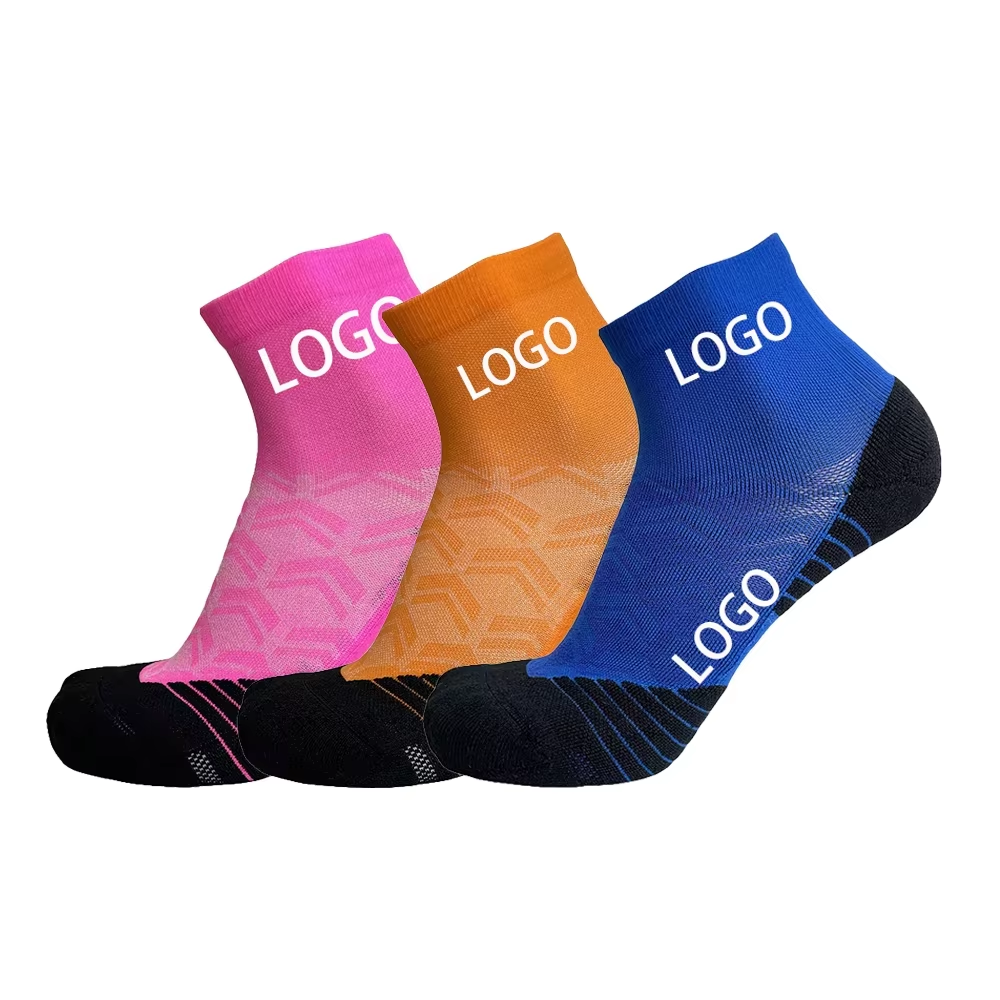
The Moisture Management Challenge in Cotton Athletic Socks
Why Pure Cotton Absorbs Sweat But Fails to Wicking It Away
Pure cotton excels at absorbing sweat—its hydrophilic fibers attract and hold up to 27 times their weight in moisture (Textile Journal, 2023). Yet unlike engineered synthetics with built-in capillary channels, cotton lacks inherent wicking mechanics. It pulls moisture from the skin effectively but traps it within the fabric instead of dispersing it outward. This damp retention drastically slows evaporation during aerobic activity, creating a humid microenvironment that impairs thermal regulation and amplifies friction.
How Damp Retention Increases Blister Risk During High-Intensity Activity
As cotton athletic socks saturate, their surface becomes increasingly abrasive. Clinical studies show friction coefficients rise by 40% when fabric moisture exceeds 65% (Journal of Sports Medicine, 2022)—converting minor rubbing into damaging shearing forces that separate epidermal layers. Blisters form 3.5× faster than with moisture-managed fabrics. For runners and court athletes, prolonged exposure also fosters bacterial growth; macerated skin faces an 84% higher risk of infection. Effective moisture relocation—not just absorption—is essential to prevent this cascade.
Durability Realities: Why 100% Cotton Athletic Socks Break Down Faster
Fiber Fatigue After Repeated Washing and Stretching
Cotton fibers weaken under mechanical stress: agitation in washing cycles causes microfractures in the cellulose structure, while daily stretching during athletic use erodes elasticity. Without polymer resilience found in synthetics, pure cotton thins and develops holes after just 15–20 wears—yielding a lifespan 40% shorter than reinforced blends.
Seam Failure in Critical Zones: Heel, Arch, and Ball of Foot
High-friction zones bear concentrated pressure during movement:
- Heel/arch seams unravel from constant shoe contact
- Ball-of-foot stitching fails under repetitive impact
- Toe box threads fray due to toe flexion
Unreinforced cotton socks develop holes three times faster in these areas. Worse, moisture retention further weakens thread integrity—increasing susceptibility to tears during lateral cuts or sprints.
Cotton-Rich Blends: The Optimal Formula for Cotton Athletic Socks
Why 60–70% Cotton + 25–30% Polyester + 5–10% Spandex Delivers Balanced Performance
This precise ratio delivers functional synergy: cotton (60–70%) ensures breathability and skin-friendly softness; polyester (25–30%) introduces capillary-driven wicking and structural reinforcement; spandex (5–10%) provides targeted compression to stabilize arches and ankles. Unlike pure cotton, this blend actively transports sweat away from the foot—reducing blister incidence by up to 67% in biomechanical trials. Polyester bolsters abrasion resistance in high-impact zones, while spandex prevents sagging-induced slippage and friction injuries.
| Fiber | Percentage | Primary Function | Performance Impact |
|---|---|---|---|
| Cotton | 60–70% | Moisture absorption & breathability | Prevents overheating during activity |
| Polyester | 25–30% | Sweat transportation & fabric resilience | Enhances durability in friction zones |
| Spandex | 5–10% | Targeted compression & shape retention | Reduces slippage and blisters |
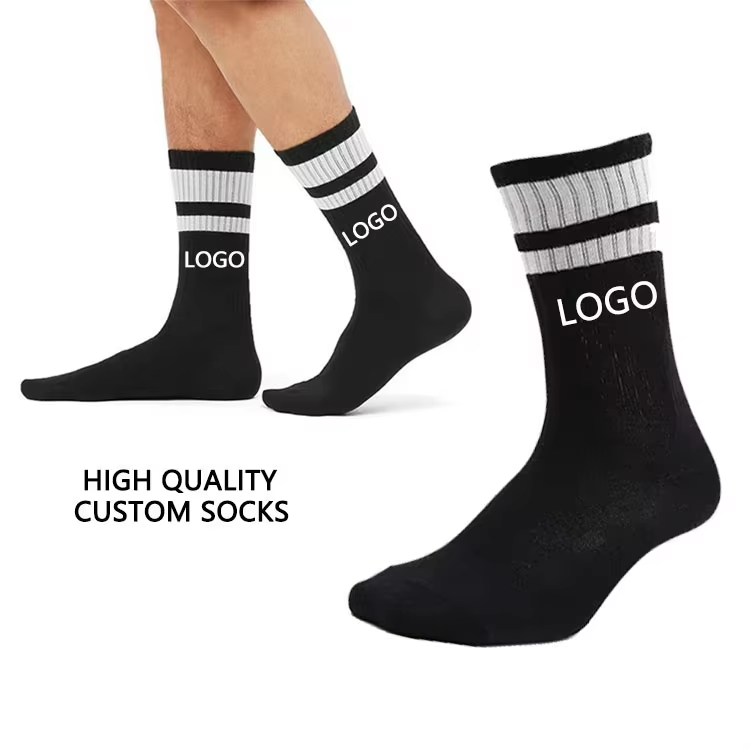
Real-World Longevity: 42% Longer Usable Lifespan vs. 100% Cotton (2024 RunRepeat Benchmark)
The 2024 RunRepeat Benchmark tested over 200 sock pairs through simulated athletic wear cycles and found cotton-rich blends lasted 42% longer before critical failure. This durability stems from polyester’s resistance to fiber breakdown during laundering—cutting pilling and thinning by 31% versus pure cotton. Spandex maintains seam integrity at stress points like heels and ball-of-foot areas, where 100% cotton typically fails first. Athletes reported blended socks retained functional compression through ~85 washes—versus just 60 for pure cotton—before requiring replacement.
How to Evaluate Cotton Athletic Socks: A Practical Selection Framework
A systematic evaluation ensures lasting comfort and performance. Begin with material composition: confirm blends align with the proven 60–70% cotton / 25–30% polyester / 5–10% spandex range. Then inspect technical execution:
- Reinforced heel and toe zones using interlock stitching
- Arch compression bands verified to retain elasticity after 50+ washes
- Mesh ventilation panels placed strategically over high-sweat areas
Prioritize third-party certifications—including Oeko-Tex® Standard 100 for chemical safety and GRS (Global Recycled Standard) for sustainable fiber content. Conduct real-world validation:
- Measure sole thickness post-treadmill run to assess compression retention
- Quantify moisture evaporation rates using precision scales
- Track seam integrity across 30+ wash cycles
Finally, validate thermal regulation by monitoring core foot temperature changes during high-intensity intervals. This framework eliminates underperforming options and identifies socks that authentically balance durability, breathability, and impact protection.