In today’s competitive market, brands are constantly seeking creative and cost-effective ways to stand out. Custom socks with logo have emerged as a brilliant solution—they’re practical, wearable, and offer endless opportunities for brand exposure. Unlike traditional promotional items that often get forgotten, a well-designed pair of custom socks becomes part of daily life, traveling with the wearer and reaching audiences far and wide. Whether used as employee benefits, event souvenirs, or customer gifts, these socks turn every step into a brand statement. Let’s break down the key steps to design custom socks with logo that truly boost brand visibility.
Clarify Brand Goals and Target Audience
Before diving into design details, it’s crucial to align your custom socks with clear brand goals and understand your target audience. What do you want to achieve with these socks? Are they for brand awareness, employee cohesion, event commemoration, or customer loyalty? Defining this upfront will guide every design decision, from logo placement to material choice.
For example, if the socks are for employee onboarding, prioritize comfort and subtle brand integration to foster a sense of belonging. If they’re promotional gifts for customers, bold logo placement and eye-catching colors can maximize brand recall. Your target audience also matters—socks for fitness enthusiasts should prioritize moisture-wicking materials and sporty designs, while those for corporate clients might lean into sleek, professional aesthetics.
Consider the scenarios where the socks will be worn. Will they be used for daily commutes, sports activities, or special events? This helps determine details like thickness, length, and durability. By tailoring the design to your goals and audience, you ensure the socks aren’t just another giveaway but a purposeful tool that resonates with the people wearing them.
Choose the Right Material and Craftsmanship
The quality of custom socks with logo directly impacts how your brand is perceived—flimsy, uncomfortable socks will reflect poorly on your brand, while high-quality ones will leave a positive, lasting impression. Start by selecting materials that balance comfort, functionality, and durability, as outlined by reputable suppliers.
Popular options include combed cotton for its softness, breathability, and moisture absorption—ideal for daily wear. Bamboo fiber is a great choice for sports or summer socks, thanks to its natural antibacterial properties that keep feet dry. Modal offers excellent drape and shape retention, paired with spandex for a snug, unrestrictive fit that moves with the wearer. All materials should be safety-tested, free from fluorescent agents and harmful dyes, to ensure they’re suitable for all audiences.
Next, pick the right craftsmanship for your logo. Embroidery is perfect for intricate logos, offering a premium, long-lasting finish that won’t fade or peel—great for brands aiming for a high-end feel. Printing processes like screen printing or offset printing work well for bold, colorful designs and larger logos, with lower minimum order quantities (as low as 200 pairs for some printing methods). For textured or 3D effects, knitted-in logos integrate seamlessly with the sock fabric, enhancing both comfort and visual appeal. Ensure the craftsmanship aligns with your budget and logo complexity—embroidery may cost more but offers better durability, while printing is more cost-effective for simple designs.
Optimize Logo Design and Placement
Your logo is the star of the custom socks, so it’s essential to optimize its design and placement for maximum visibility without sacrificing aesthetics or comfort. First, ensure your logo file is in a high-resolution vector format (AI, CDR, PSD, or PDF) to avoid distortion when scaled—this is crucial for both printing and embroidery. If you don’t have a pre-designed logo, many suppliers offer professional design support to refine your ideas and create a logo that translates well on fabric.
Color coordination is key. Your logo should stand out against the sock’s base color but still align with your brand’s color palette. For example, a bright logo pops on neutral-toned socks, while a subtle, monochromatic logo works well on bold, colorful socks. Avoid clashing colors that make the logo hard to read, and consider using Pantone colors for consistency across all brand materials.
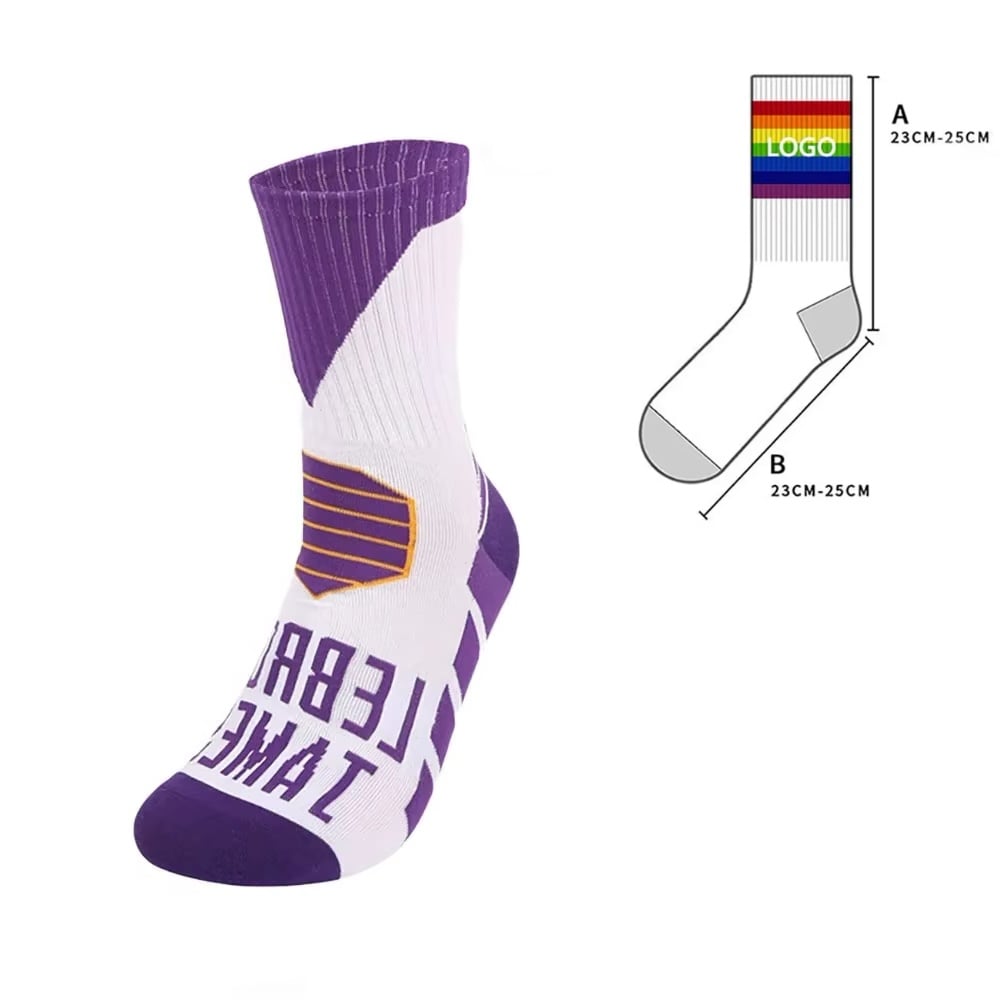
Logo placement depends on the sock style and your visibility goals. The calf area (23-25cm from the ankle, as suggested by industry standards) is highly visible when sitting or walking, making it ideal for brand exposure. The ankle or instep is a more subtle option, suitable for professional or minimalist designs. For crew socks or sports socks, wrapping the logo around the calf can increase visibility from multiple angles. Keep the logo size proportional to the sock—too large may feel overwhelming, while too small may go unnoticed. A good rule of thumb is to keep the logo between 5-8cm in width, depending on the sock size.
Leverage Scenarios to Enhance Practicality and Spreadability
To truly boost brand visibility, custom socks with logo should be designed to fit seamlessly into real-life scenarios, encouraging frequent wear and word-of-mouth spread. Think beyond just putting a logo on a sock—add practical features that make the socks useful, so people reach for them often.
For employee benefits, add subtle team-specific details (like department names or slogans) alongside the logo to foster pride and camaraderie. Employees will wear these socks in their daily lives, turning them into walking brand ambassadors. For event souvenirs, tie the sock design to the event theme (e.g., sports event socks with game dates or conference socks with venue logos) to create a memorable keepsake that attendees will hold onto.
For promotional gifts, pair the socks with other brand items (like water bottles or tote bags) to create a cohesive gift set that amplifies brand exposure. Offer customization options like different sizes or colors to cater to diverse preferences, increasing the likelihood of use. Small businesses can take advantage of flexible minimum order quantities (some suppliers offer MOQs as low as 100 pairs, adjustable based on 工艺) to test the market without overcommitting.
Don’t overlook the power of storytelling. Add a small tag or label with a short brand message (e.g., “Crafted for comfort, designed for impact”) to create an emotional connection. When people love the socks and the story behind them, they’re more likely to share them with friends, family, or colleagues—extending your brand’s reach organically.

 EN
EN